
Building a Customer Health Score for E-commerce
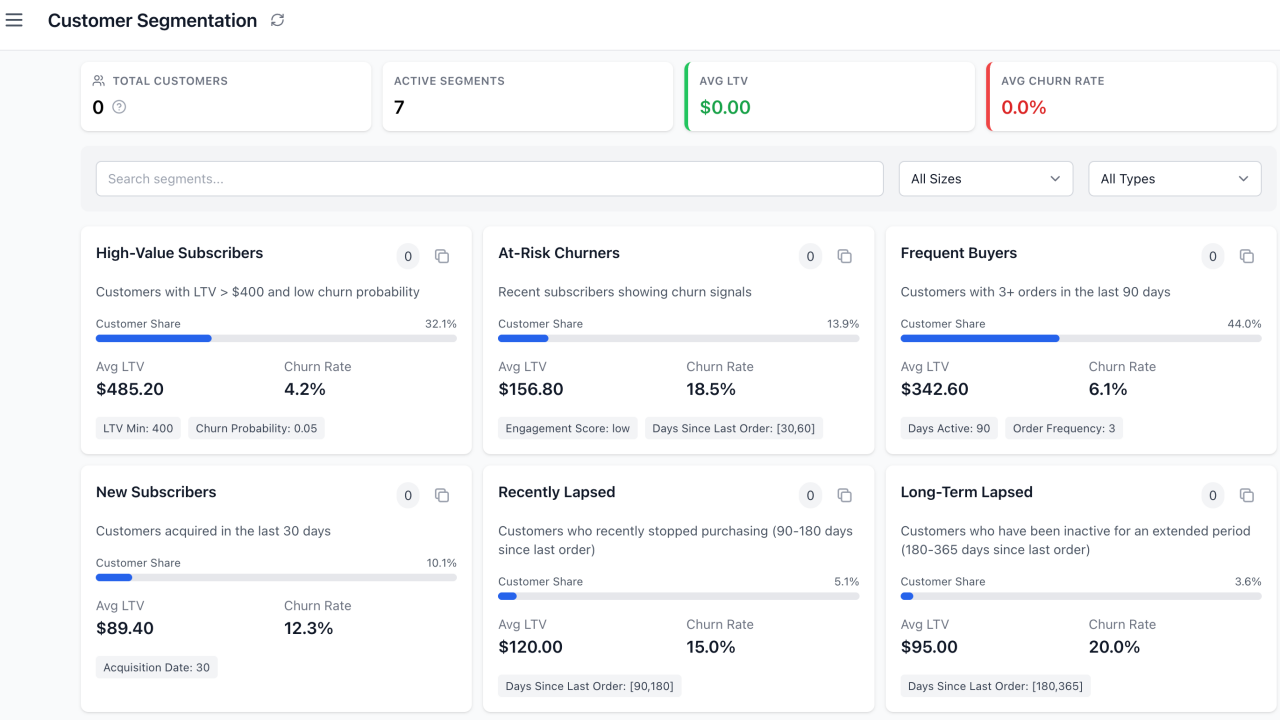
Most e-commerce brands do not know which customers are about to leave until they are already gone. They see the churn in their monthly reports - repeat purchase rate down, subscription cancellations up - but by then the damage is done. A customer health score changes this dynamic by giving you a forward-looking indicator of each customer's likelihood to remain active, spend more, or churn.
Think of a health score as a vital signs dashboard for your customer base. Just as a doctor monitors blood pressure, heart rate, and temperature to assess a patient's condition before symptoms appear, a health score monitors behavioral signals to assess a customer's engagement before they disappear.
This guide covers how to build a customer health score from scratch - the input signals that matter, how to weight them, how to tier customers for action, and how to use health scores to drive proactive retention.
What a Customer Health Score Is
A customer health score is a composite metric that represents the overall strength of a customer's relationship with your brand. It combines multiple behavioral signals into a single number - typically scaled from 0 to 100 - that indicates whether a customer is thriving, at risk, or in critical condition.
The score is not a prediction of future purchase probability (though it correlates with it). It is an assessment of current engagement health based on observable behaviors. A customer with a high health score is demonstrating the behaviors that historically precede continued purchasing and engagement. A customer with a declining health score is exhibiting patterns that historically precede churn.
The value of a health score lies in its simplicity and actionability. Instead of asking a retention manager to monitor 15 different metrics for thousands of customers, you give them a single score that tells them where to focus attention. The complexity lives in how the score is calculated, not in how it is used.
Choosing the Right Input Signals
The quality of your health score depends entirely on the signals you feed into it. Here are the most important categories for e-commerce.
Recency
When did the customer last interact with your brand? Recency is the single most predictive signal of future purchasing behavior. The longer a customer goes without a purchase, site visit, or email engagement, the less likely they are to return.
Recency should be measured relative to the customer's own purchase cycle, not an arbitrary threshold. A customer who buys monthly and has not purchased in 45 days is more at risk than a customer who buys quarterly and has not purchased in 45 days. Normalizing recency against expected purchase frequency makes the signal far more useful.
Key recency signals to track include days since last purchase, days since last site visit, days since last email open or click, and days since last support interaction.
Frequency
How often does the customer engage? Frequency captures the intensity of the relationship. A customer who has purchased 8 times in 12 months has a demonstrably stronger relationship than one who has purchased twice in the same period - even if their most recent purchase was on the same date.
Frequency signals include total order count over defined periods (30, 90, 180, 365 days), site visit frequency, email engagement frequency, and account login frequency (for brands with customer portals).
For subscription businesses, track subscription tenure (months active) and any pauses or skips as frequency-adjacent signals.
Monetary Value
How much is the customer spending? Monetary value captures the economic depth of the relationship. Higher-spending customers are typically more invested in the brand, but declining spend from a previously high-value customer can be an important health warning sign.
Track total revenue over defined periods, average order value trends (increasing, stable, or declining), product category breadth (are they exploring your catalog or buying the same thing each time), and discount dependency (what percentage of orders use promo codes).
Engagement Signals
Beyond purchasing, how is the customer engaging with your brand? These softer signals provide early warning of health changes before they manifest in purchase behavior.
Important engagement signals include email open and click rates over time (are they trending up or down), SMS engagement for brands using text marketing, social media interactions (follows, likes, comments, shares), review or UGC submissions, referral activity, and loyalty program participation.
A customer who stops opening emails three weeks before they stop purchasing gives you a three-week head start on intervention - but only if you are tracking email engagement as part of their health score.
Support Interactions
Customer support data is a frequently overlooked health signal. The nature and frequency of support interactions can strongly indicate health. Track the number of support tickets over recent periods, ticket sentiment (positive, neutral, negative), resolution satisfaction scores, whether recent tickets involved complaints versus questions, and open or unresolved issues.
A customer who has filed three negative support tickets in the last month is at significantly higher churn risk than one who has had zero support interactions. Incorporating support data into your customer intelligence ensures these signals are captured in the health score.
Weighting Factors
Not all signals contribute equally to health. The right weights depend on your specific business model, product category, and purchase cycle. Here is a framework for establishing weights.
Start with Recency
Recency should carry the highest weight in most e-commerce health scores - typically 25 to 35 percent of the total. The reason is that recency is the most time-sensitive signal. A customer can have excellent historical frequency and monetary value but still be at risk if they have gone silent recently.
Weight by Predictive Power
The best way to determine signal weights is empirically: analyze which signals best predict churn in your historical data. Run a logistic regression or a simple correlation analysis between each signal and a binary churn indicator (did the customer make another purchase within X days or not). The signals with the strongest predictive relationship should carry the most weight.
A typical starting framework might look like this: recency signals at 30 percent, frequency signals at 25 percent, monetary signals at 15 percent, engagement signals at 20 percent, and support signals at 10 percent.
Account for Business Model Differences
Subscription businesses should weight subscription-specific signals heavily - skip frequency, pause behavior, and subscription tenure. These signals are direct indicators of health in a way that they are not for non-subscription brands.
High-AOV brands with long purchase cycles (luxury goods, furniture, electronics) should weight engagement signals more heavily than frequency, because purchases are inherently infrequent and engagement between purchases is a better health indicator.
Consumable product brands should weight purchase frequency and recency heavily, because the purchase cycle is predictable and deviations from expected timing are strong churn signals.
Iterate and Calibrate
Your initial weights are hypotheses. After running your health score for 2 to 3 months, validate the weights by checking whether low-health customers actually churn at higher rates than high-health customers. If the score is not discriminating well - if customers scored 30 churn at similar rates to customers scored 70 - your weights need adjustment.
Tiering Customers
A continuous 0 to 100 score is useful for analysis, but for operational action, you need tiers. Three to four tiers strikes the right balance between granularity and simplicity.
Healthy (Score 70-100)
These customers are actively engaged and purchasing at or above their expected cadence. They do not need intervention - they need reinforcement. Actions for healthy customers include loyalty program engagement, early access to new products, referral program enrollment, and VIP experiences.
The key principle is to reward healthy behavior rather than taking it for granted. Healthy customers are your most valuable segment, and keeping them healthy costs far less than recovering at-risk customers.
Stable (Score 50-69)
These customers are moderately engaged but showing some signs of declining activity. They may have lengthened their purchase interval, reduced their email engagement, or decreased their average order value. They are not in immediate danger of churning, but they are trending in the wrong direction.
Actions for stable customers include re-engagement email sequences, personalized product recommendations based on their purchase history, satisfaction surveys to identify potential friction points, and gentle incentives to stimulate a purchase (free shipping, bonus loyalty points).
At-Risk (Score 30-49)
These customers have shown significant declines across multiple health signals. They have likely missed expected purchases, stopped engaging with emails, or had negative support experiences. Without intervention, most at-risk customers will churn within 30 to 60 days.
Actions for at-risk customers include direct outreach (personal email from a founder or retention manager), win-back offers with meaningful incentives, feedback requests to understand what went wrong, and alternative engagement paths (social media, community, content).
At-risk interventions should feel genuinely personal, not automated. These customers need to feel that the brand cares about their experience and wants to solve their problems - not just extract another purchase.
Critical (Score 0-29)
These customers have effectively churned or are days away from it. They have not purchased in a long time, do not engage with communications, and may have had unresolved negative experiences. Recovery rates for critical customers are typically 5 to 15 percent, so intervention efficiency matters.
Actions for critical customers include a final win-back attempt with a strong offer, a feedback survey (even if they do not purchase again, understanding why they left is valuable), suppression from regular marketing to avoid negative brand associations, and periodic re-engagement attempts at 90 and 180-day intervals.
Using Health Scores for Proactive Outreach
The biggest shift that health scores enable is moving from reactive to proactive retention. Instead of waiting for customers to churn and then trying to win them back, you intervene while they are still active - when the probability of success is highest and the cost of intervention is lowest.
Triggered Workflows
Set up automated workflows that trigger when a customer's health score crosses a tier boundary. When a customer drops from Healthy to Stable, trigger a re-engagement sequence. When they drop from Stable to At-Risk, trigger a more aggressive intervention. This ensures that no customer slips through the cracks due to human oversight.
Prioritized Outreach Lists
For retention managers who do direct outreach, health scores provide a prioritized list of who to contact. Rather than randomly selecting customers for check-in calls or personal emails, focus on high-value customers whose scores have recently declined. These are the customers where intervention has the highest expected value - they are worth a lot and they are at risk of leaving.
Segment-Specific Campaigns
Health score tiers can be used as segmentation criteria for email and SMS campaigns. Send different messaging to healthy customers (reinforcement and upsell) versus at-risk customers (re-engagement and win-back). This prevents the common mistake of sending the same communication to customers in very different states of engagement.
Platforms with smart segmentation capabilities allow you to combine health score tiers with other customer attributes - creating segments like "high-value, at-risk subscription customers" or "recently acquired, rapidly declining health score" - for precisely targeted interventions.
Combining Health Scores with Deeper Analytics
A health score is a starting point, not an endpoint. The most effective retention programs combine health scores with deeper analytical capabilities to understand why customers are healthy or at risk, and what specific interventions are most likely to work.
Root Cause Analysis
When a customer's health score declines, the natural question is: why? Drilling into the component signals reveals the specific behavior change - did they stop opening emails? Did they have a negative support experience? Did their purchase frequency decline? Each root cause suggests a different intervention.
Predictive Modeling
Health scores based on current behavior can be enhanced with predictive models that forecast future health based on behavioral patterns. A customer whose health score is currently 75 but whose trajectory suggests they will be at 45 in 30 days is more urgent than a customer whose score is 65 but stable.
Retention intelligence platforms combine current health assessment with predictive modeling to identify at-risk customers earlier and intervene more effectively.
Lifetime Value Integration
Combining health scores with LTV estimates creates a two-dimensional view of your customer base: how much is each customer worth, and how likely are they to remain active? This prioritization matrix ensures you invest retention resources where they have the highest expected return - on high-value customers who are at risk of churning.
Getting Started
Building a customer health score does not require a massive data infrastructure project. Start with the data you already have - purchase history, email engagement, and support tickets - and build a simple weighted score using a spreadsheet or basic SQL queries.
Define three or four tiers and start using them to guide your retention outreach. Measure the results: do customers who receive tier-based interventions retain at higher rates than a control group? Use those results to refine your signal weights and tier thresholds.
Over time, add more signals (site visit data, loyalty program data, social engagement) and refine your weights based on empirical validation. The goal is continuous improvement, not perfection on day one.
A well-implemented health score transforms retention from a reactive, calendar-driven activity into a proactive, data-driven system that catches problems early and solves them while they are still solvable. That shift alone can be worth millions in preserved customer lifetime value for growing e-commerce brands.
Frequently Asked Questions
What is a customer health score?
A customer health score is a composite metric - usually scaled from 0 to 100 - that combines behavioral signals such as purchase recency, order frequency, email engagement, and support interactions into a single number representing the strength of a customer's relationship with your brand. It acts as an early warning system for churn, letting retention teams prioritize outreach before customers actually leave. Unlike standalone metrics like repeat purchase rate, the health score gives you a full, forward-looking view of each customer.
How do I build a customer health score from scratch?
Start with the data you already have: purchase history, email engagement, and support tickets. Assign a weight to each signal category - a common starting point is recency at 30%, frequency at 25%, engagement at 20%, monetary value at 15%, and support signals at 10%. Calculate a normalized score for each signal, multiply by the weight, and sum them into a single score. Then define 3-4 tier thresholds (Healthy, Stable, At-Risk, Critical) and validate by checking whether low-scoring customers actually churn at higher rates over the following 60-90 days. You can start in a spreadsheet and graduate to a platform like Finsi's retention intelligence as your customer base grows.
What signals should I include in a health score?
The most important signals fall into five categories: recency (days since last purchase and last site visit), frequency (order count and email engagement rate over rolling windows), monetary value (total spend and AOV trends), engagement (email opens, SMS clicks, loyalty program activity, and social interactions), and support interactions (ticket volume, sentiment, and resolution satisfaction). The key is to normalize each signal relative to the customer's own baseline - a quarterly buyer who misses one cycle is more concerning than a first-time buyer who has not returned in 30 days. See our guide on customer segmentation strategies for more on behavioral signal selection.
How should I act on customer health scores?
Map each tier to a specific playbook. Healthy customers (70-100) should receive loyalty reinforcement, VIP perks, and referral invitations - not discounts. Stable customers (50-69) benefit from re-engagement sequences and personalized product recommendations. At-Risk customers (30-49) need direct, personal outreach and meaningful win-back offers. Critical customers (0-29) warrant a final recovery attempt and a feedback survey. The most impactful approach is setting up automated workflows that trigger when a customer crosses a tier boundary, combined with smart segmentation to tailor the intervention to the customer's value and context. Start a free retention audit to see which of your customers fall into each tier today.
What tools can I use for customer health scoring?
You can build a basic health score manually using SQL queries or spreadsheets, but this approach does not scale beyond a few thousand customers and requires regular manual updates. Dedicated platforms automate score calculation, update in real time as new behavioral data arrives, and integrate directly with your marketing and CRM tools to trigger tier-based workflows. Finsi combines health scoring with predictive churn modeling, RFM segmentation, and AI-powered recommendations - so you get not only the score but also specific actions for each customer segment. For growth teams and founders managing retention alongside acquisition, an automated health scoring system eliminates the manual overhead and ensures no at-risk customer slips through unnoticed.
Stop guessing. Start knowing.
Finsi connects your e-commerce data, tells you what to do, and executes it — email campaigns, ad optimization, retention flows. Free 30-day trial.
Start Free Trial