
What Is a Customer Health Score?
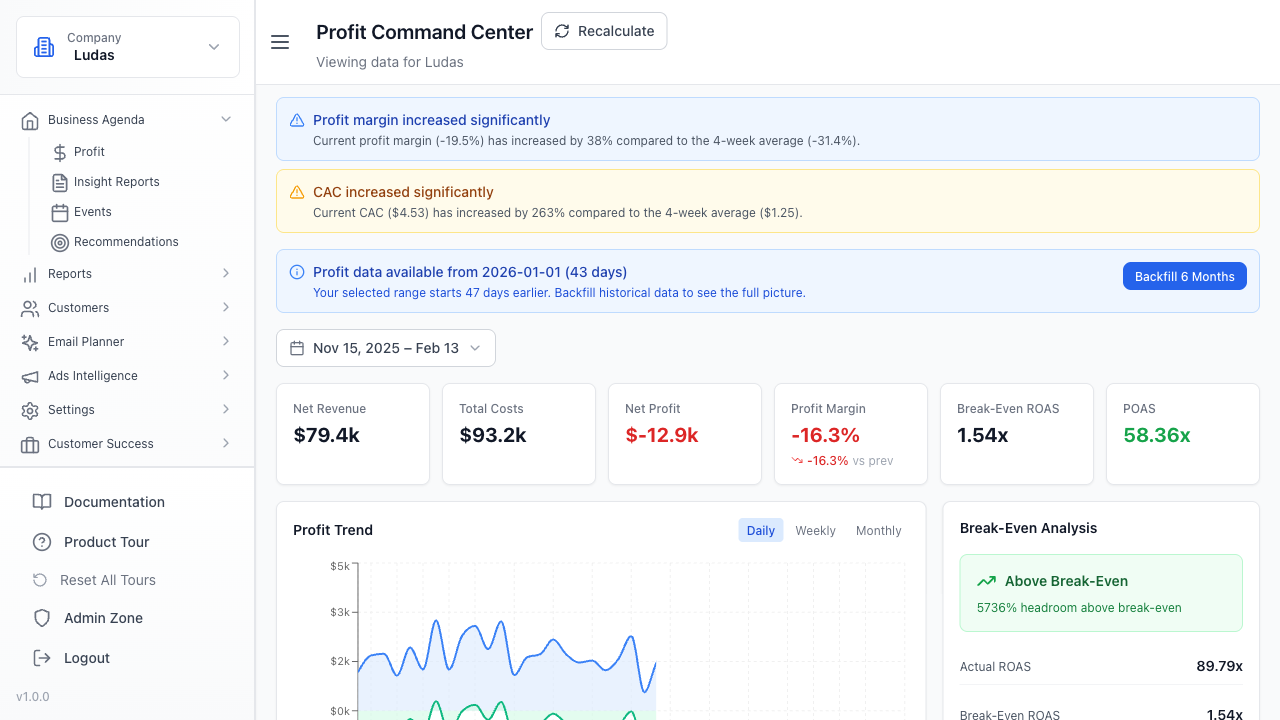
A customer health score is a quantitative metric that predicts the likelihood a customer will remain active and continue generating revenue, typically combining behavioral, engagement, and account data into a single number.
Definition and Core Purpose
A customer health score is a composite metric that aggregates signals from product usage, support interactions, billing patterns, and engagement to forecast retention risk. The score answers a single operational question: which customers are most likely to churn in the next 30, 60, or 90 days?
Unlike NPS or CSAT, which measure satisfaction at a point in time, health scores are predictive and continuous. They update as customer behavior changes, making them actionable for retention teams. A customer with a declining health score signals intervention opportunity before cancellation happens.
Health scores typically range from 0 - 100 or use categorical buckets (at-risk, at-watch, healthy, thriving). The scale matters less than consistency and calibration against actual churn outcomes in your cohort.
Core Components of a Health Score
Most effective health scores combine three signal categories: product engagement, commercial signals, and support sentiment. The weighting varies by business model, but each category captures a distinct dimension of customer viability.
Product engagement measures how frequently and deeply a customer uses core features. For SaaS, this might include login frequency, feature adoption rate, or monthly active users within an account. For DTC, it translates to repeat purchase rate, cart abandonment, and browsing behavior. Declining engagement is the earliest warning sign of churn risk.
Commercial signals reflect the customer's financial health and contract stability. These include payment failures, invoice disputes, plan downgrades, expansion velocity, and days since last purchase. A customer with a recent payment decline or downgrade move immediately into higher-risk buckets regardless of engagement metrics.
Support sentiment captures friction and satisfaction through ticket volume, resolution time, and sentiment analysis of support interactions. High support ticket volume without resolution, or repeated complaints about the same issue, correlates strongly with churn. Conversely, zero support tickets can also signal disengagement in some contexts.
- Engagement: login frequency, feature adoption, session duration, API calls
- Commercial: payment health, plan changes, expansion revenue, contract renewal proximity
- Support: ticket volume, resolution time, sentiment, escalation rate
How to Build and Calibrate a Health Score
Start by identifying your actual churn cohort over the past 6 - 12 months. Pull behavioral and account data for customers who churned, and compare it to customers who retained. This historical comparison reveals which signals most reliably predicted churn before it happened.
Assign weights to each component based on predictive power. If login frequency predicts churn with 70% accuracy but support tickets predict it with 45%, the engagement signal should carry more weight. Use logistic regression or similar modeling to quantify each signal's contribution.
Test the score against a holdout cohort of recent churners and retained customers. Calculate precision and recall: how many at-risk customers actually churned, and how many churners did the score catch? Aim for 60 - 75% precision initially; perfection is impossible and unnecessary.
Recalibrate quarterly as product changes, market conditions, and customer behavior shift. A health score built on 2023 data may misfire in 2024 if your product roadmap or customer mix changed materially.
Using Health Scores for Retention Strategy
Health scores enable triage. Instead of treating all at-risk customers equally, operators segment by score and assign interventions proportionally. A customer with a score of 25 gets immediate outreach from customer success; a score of 55 gets a nurture email; a score of 80 gets no intervention.
Common retention actions tied to health score thresholds include: proactive success calls for scores below 40, feature training or onboarding refreshes for scores 40 - 60, and expansion conversations for scores above 75. The specific actions depend on churn root causes in your data.
Health scores also inform resource allocation. If 20% of your customer base is at-risk, but they represent 60% of revenue, that segment demands disproportionate attention. Operators use health scores to identify high-value churn risk and justify CS headcount or tooling investment.
For renewal-based businesses, health scores should integrate with renewal forecasting. A customer with a declining score 90 days before renewal is a renewal risk; one with a rising score is an upsell candidate. Linking health scores to revenue forecasting closes the loop between retention activity and pipeline.
Common Pitfalls and Calibration Traps
Overweighting recency is a frequent mistake. A customer who had zero engagement last month but high engagement historically may not be at-risk; they may be on vacation or between projects. Smoothing engagement signals over 30 - 90 days reduces noise.
Ignoring cohort effects distorts scores. A customer acquired 3 months ago with low engagement may be in normal onboarding; a 3-year customer with the same engagement is genuinely at-risk. Segment health score models by customer age, plan tier, or use case to avoid false positives.
Treating health scores as static is another trap. A score is only useful if it updates weekly or daily and if retention teams act on changes. A customer whose score dropped 20 points in one week is an immediate priority; one whose score has been stable at 35 for six months may not be.
Finally, health scores are predictive, not causal. A low score indicates risk, not the reason for risk. Operators must still investigate why a customer is disengaging. Is it a product gap, poor fit, unmet expectation, or external factor? The score triggers investigation; it does not replace it.
Health Scores Across Business Models
SaaS health scores emphasize product engagement and support friction because churn is typically driven by lack of value realization or unresolved issues. A SaaS operator might weight engagement at 50%, commercial signals at 30%, and support at 20%.
DTC and ecommerce health scores lean heavily on purchase behavior and recency. A customer who has not purchased in 120 days is at-risk regardless of support tickets. DTC models often use RFM (recency, frequency, monetary) as a foundation, then add engagement signals like email opens or site visits. The weighting might be 60% commercial, 30% engagement, 10% support.
Marketplace and subscription box models require custom signals. Marketplace health scores track seller or buyer activity, transaction volume, and dispute rates. Subscription box models track box opens, returns, and pause frequency. The principle remains the same: combine behavioral, commercial, and friction signals into a predictive composite.
Measuring Impact of Health Score Interventions
To prove health score ROI, compare churn rate and retention revenue for customers who received interventions (based on health score) versus a control group. If at-risk customers who received outreach have 15% lower churn than at-risk customers who did not, the score is working.
Track the cost per intervention against the revenue saved. If a proactive success call costs $50 and saves a $5,000 annual contract, the ROI is clear. If interventions are expensive and churn is low, the health score may be over-triggering.
Monitor score accuracy over time. Calculate the percentage of customers flagged as at-risk who actually churn within 30, 60, and 90 days. If accuracy drops below 50%, recalibrate. If it stays above 70%, the model is stable and trustworthy.
FAQ
How often should a health score update?
Daily or weekly is ideal for operational agility. Daily updates allow CS teams to catch score drops in real time and respond quickly. Weekly updates are sufficient if your customer base is large and intervention capacity is limited. Monthly updates are too slow to be actionable.
What's a good health score accuracy threshold?
Aim for 60 - 75% precision on the at-risk segment initially. This means 60 - 75% of customers flagged as at-risk actually churn within your prediction window. Perfect accuracy is impossible and unnecessary; the goal is to identify enough true churn risk to justify intervention and improve retention.
Should health scores be shared with customers?
Generally no. Health scores are internal diagnostic tools, not customer-facing metrics. Showing a customer a low health score can damage trust and feel accusatory. Instead, use the score to inform proactive outreach and support, not to communicate risk back to the customer.
Can a single health score work across all customer segments?
Not effectively. Enterprise customers, SMBs, and self-serve customers churn for different reasons and exhibit different behavioral patterns. Build separate models for each segment, or use segment-specific weights within a unified framework. A one-size-fits-all score will misfire on smaller or larger cohorts.
FAQ
How often should a health score update?
Daily or weekly is ideal for operational agility. Daily updates allow CS teams to catch score drops in real time and respond quickly. Weekly updates are sufficient if your customer base is large and intervention capacity is limited. Monthly updates are too slow to be actionable.
What's a good health score accuracy threshold?
Aim for 60 - 75% precision on the at-risk segment initially. This means 60 - 75% of customers flagged as at-risk actually churn within your prediction window. Perfect accuracy is impossible and unnecessary; the goal is to identify enough true churn risk to justify intervention and improve retention.
Should health scores be shared with customers?
Generally no. Health scores are internal diagnostic tools, not customer-facing metrics. Showing a customer a low health score can damage trust and feel accusatory. Instead, use the score to inform proactive outreach and support, not to communicate risk back to the customer.
Can a single health score work across all customer segments?
Not effectively. Enterprise customers, SMBs, and self-serve customers churn for different reasons and exhibit different behavioral patterns. Build separate models for each segment, or use segment-specific weights within a unified framework. A one-size-fits-all score will misfire on smaller or larger cohorts.