
Looker vs Omni vs Metabase for Brands: BI Stack Comparison
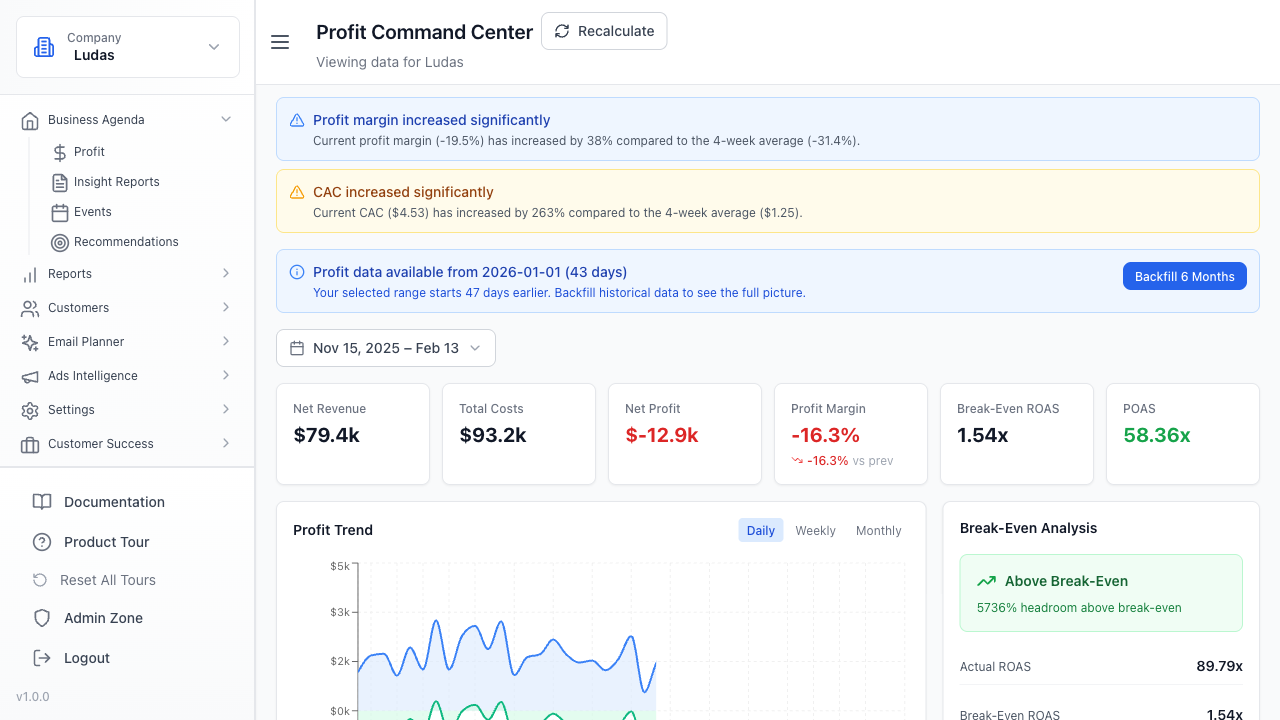
Business intelligence platforms differ in architecture, deployment model, and pricing structure - affecting which tool fits a brand's analytics maturity and budget.
What Each Platform Does
Looker is a Google-owned BI tool built on a semantic layer called LookML. It connects to data warehouses (BigQuery, Snowflake, Redshift) and enforces consistent metric definitions across teams. Looker is enterprise-grade: it's designed for organizations with dedicated analytics engineering resources and complex data governance needs.
Omni is a newer entrant positioned as a lightweight alternative to Looker. It also uses a semantic layer but with a lower barrier to entry. Omni targets mid-market operators who want centralized metrics without the overhead of a full LookML implementation.
Metabase is open-source and self-hosted by default, though a cloud version exists. It requires minimal setup and no semantic layer - operators write SQL or use a visual query builder. Metabase is fastest to deploy but trades flexibility and scalability for simplicity.
Deployment and Infrastructure
Looker runs as a managed cloud service (Looker Cloud) or on-premise. Most DTC brands use Looker Cloud, which integrates tightly with Google Cloud. Deployment is handled by Google, but configuration and LookML development fall on the brand's analytics team or a consultant. Setup typically takes 4 - 12 weeks depending on data warehouse maturity.
Omni is cloud-only and fully managed. Onboarding is faster than Looker because the semantic layer is simpler and the UI guides metric creation. A small team can be operational in 2 - 4 weeks.
Metabase can be self-hosted (Docker, Kubernetes, or traditional servers) or used as a managed cloud service. Self-hosted Metabase has zero vendor lock-in and runs on modest infrastructure. Cloud Metabase removes DevOps burden but costs more than self-hosted. Deployment is fastest of the three - often same-day for cloud, 1 - 2 weeks for self-hosted.
Pricing Model and Total Cost
Looker charges per user seat, typically $3,000 - $8,000 per user annually depending on contract size and edition. A brand with 10 analysts and 50 stakeholders viewing dashboards will pay $30,000 - $80,000 per year just for Looker licenses. Additional costs include data warehouse compute, implementation services, and internal analytics engineering headcount.
Omni uses a consumption-based model: pricing scales with queries executed and data scanned, not seats. A typical mid-market brand pays $500 - $3,000 per month. Omni is cheaper than Looker for read-heavy workloads but can spike if query volume grows. No per-seat tax means more stakeholders can access dashboards without cost increase.
Metabase open-source is free. Self-hosted costs only infrastructure (cloud VM, database, storage). Managed Metabase Cloud is $300 - $1,000 per month depending on usage tier. Total cost of ownership for self-hosted Metabase is often 70 - 80% lower than Looker, but requires internal DevOps resources.
Semantic Layer and Metric Governance
Looker's LookML is a declarative language that defines dimensions, measures, and relationships between tables. Once a metric is defined in LookML, all dashboards and reports use the same definition. This prevents metric drift - the problem where 'revenue' means different things in different reports. LookML requires analytics engineering expertise and version control discipline.
Omni's semantic layer is less code-heavy than LookML. Operators define metrics through a UI, and Omni generates the underlying SQL. It's faster to iterate but less flexible for complex transformations. Omni is better for brands that want governance without hiring a dedicated LookML engineer.
Metabase has no semantic layer. Operators write SQL directly or use the visual query builder. This means no enforced metric consistency - two analysts can write different queries for the same KPI. Metabase is ideal for exploratory analysis and ad-hoc reporting but poor for organizations that need strict metric definitions.
Data Warehouse Integration
Looker supports all major warehouses: BigQuery, Snowflake, Redshift, Databricks, and others. It's agnostic to warehouse choice and works equally well with any. Looker pushes aggregation to the warehouse, so performance scales with warehouse compute.
Omni also supports major warehouses but is optimized for cloud-native options (BigQuery, Snowflake, Databricks). Integration is simpler than Looker because Omni handles more of the plumbing automatically.
Metabase connects to any SQL database, including warehouses, operational databases, and data lakes. It's database-agnostic but performance depends on query efficiency. Metabase can struggle with very large datasets if queries aren't optimized, since it doesn't have Looker's semantic layer to enforce efficient aggregation patterns.
Operator Fit and Use Cases
Looker is for brands with 50+ employees, dedicated analytics teams, and complex data needs. Use Looker if metric consistency is non-negotiable, if you have multiple business units with different reporting requirements, or if you're building a data-driven culture that requires centralized governance. Looker is also the choice if your data warehouse is BigQuery and you want tight Google Cloud integration.
Omni fits mid-market brands (20 - 100 employees) that want BI governance without the overhead. Choose Omni if you have 2 - 5 analysts, need to move fast, and want stakeholders to self-serve dashboards without creating metric chaos. Omni is also good for brands that don't have LookML expertise in-house.
Metabase is for small brands (under 30 employees), startups, or teams that prioritize speed and cost over governance. Use Metabase if your analytics needs are exploratory, if you have strong SQL skills in-house, or if you want to avoid vendor lock-in. Metabase is also ideal for brands that want to own their infrastructure and don't trust managed services.
Implementation Timeline and Effort
Looker implementation is a 4 - 12 week project. Week 1 - 2: data warehouse audit and LookML planning. Week 3 - 8: LookML development, testing, and refinement. Week 9 - 12: dashboard build-out, user training, and handoff. Brands often hire a Looker partner (Deloitte, Slalom, etc.) to accelerate, adding $50,000 - $200,000 to the project cost.
Omni implementation is 2 - 4 weeks. Week 1: data warehouse connection and schema review. Week 2 - 3: metric definition and dashboard creation. Week 4: user training and launch. Omni's UI-driven approach and built-in templates reduce custom development.
Metabase implementation is 1 - 2 weeks for cloud or 2 - 4 weeks for self-hosted. Cloud Metabase can be live same-day. Self-hosted requires infrastructure setup, database configuration, and security hardening. No semantic layer means faster initial deployment but slower long-term scaling.
FAQ
Which platform is cheapest for a 10-person DTC brand?
Metabase self-hosted is cheapest - roughly $200 - $500 per month for infrastructure. Managed Metabase Cloud is $300 - $500 per month. Omni is $500 - $1,500 per month. Looker is not cost-competitive for small teams due to per-seat pricing. A 10-person brand would pay $30,000+ annually for Looker licenses alone.
Can stakeholders use Looker, Omni, or Metabase without SQL knowledge?
Yes, all three have UI-driven dashboards and filters. Looker and Omni enforce metric definitions, so non-technical stakeholders see consistent KPIs. Metabase also has a visual query builder, but stakeholders who want custom reports may need SQL help. Omni and Looker are better for non-technical users because the semantic layer prevents metric confusion.
What if we switch BI platforms later - is there lock-in?
Looker lock-in is high: LookML is Looker-specific and doesn't port to other tools. Omni and Metabase have less lock-in because they use standard SQL. Metabase self-hosted has zero lock-in - you own the data and can export queries. If portability matters, avoid Looker or plan for a 4 - 8 week migration project.
Which platform is best for real-time dashboards?
Looker and Omni both support real-time or near-real-time dashboards if your data warehouse supports streaming ingestion (BigQuery, Snowflake, Databricks). Metabase can also do real-time dashboards but performance depends on query efficiency and database load. All three are limited by data warehouse refresh rate, not the BI tool itself. If you need sub-minute latency, consider an event streaming platform (Segment, mParticle) feeding your warehouse.
FAQ
Which platform is cheapest for a 10-person DTC brand?
Metabase self-hosted is cheapest - roughly $200 - $500 per month for infrastructure. Managed Metabase Cloud is $300 - $500 per month. Omni is $500 - $1,500 per month. Looker is not cost-competitive for small teams due to per-seat pricing. A 10-person brand would pay $30,000+ annually for Looker licenses alone.
Can stakeholders use Looker, Omni, or Metabase without SQL knowledge?
Yes, all three have UI-driven dashboards and filters. Looker and Omni enforce metric definitions, so non-technical stakeholders see consistent KPIs. Metabase also has a visual query builder, but stakeholders who want custom reports may need SQL help. Omni and Looker are better for non-technical users because the semantic layer prevents metric confusion.
What if we switch BI platforms later - is there lock-in?
Looker lock-in is high: LookML is Looker-specific and doesn't port to other tools. Omni and Metabase have less lock-in because they use standard SQL. Metabase self-hosted has zero lock-in - you own the data and can export queries. If portability matters, avoid Looker or plan for a 4 - 8 week migration project.
Which platform is best for real-time dashboards?
Looker and Omni both support real-time or near-real-time dashboards if your data warehouse supports streaming ingestion (BigQuery, Snowflake, Databricks). Metabase can also do real-time dashboards but performance depends on query efficiency and database load. All three are limited by data warehouse refresh rate, not the BI tool itself. If you need sub-minute latency, consider an event streaming platform (Segment, mParticle) feeding your warehouse.