
How to Fix Creative Fatigue in 14 Days
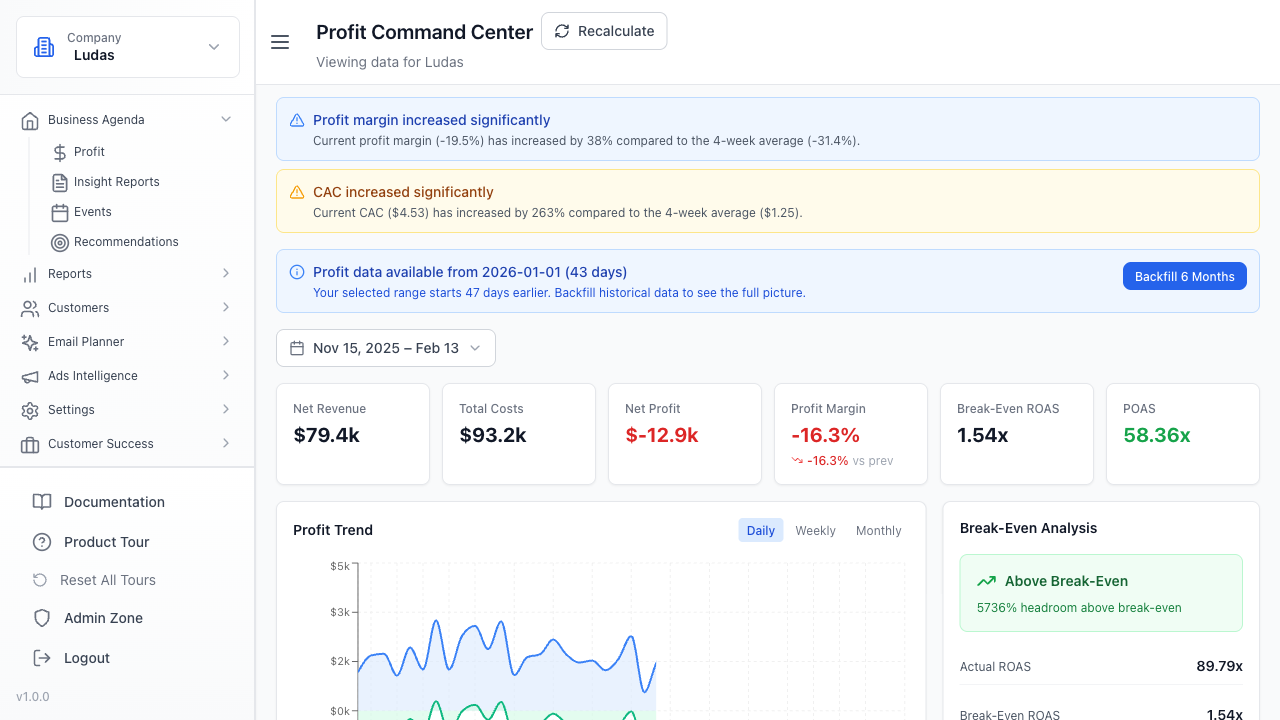
Creative fatigue occurs when ad performance declines due to audience oversaturation, repetitive messaging, or exhausted creative variants - typically visible as rising cost per acquisition and falling click-through rates on previously stable assets.
Recognize the Symptoms
Creative fatigue is not a mystery. It shows up in your metrics first. CPA creeps up 15 - 25% over 2 - 3 weeks while CTR flattens or drops. ROAS on your top performers falls below breakeven. Frequency climbs but conversion rate stalls. The audience has seen the creative enough times that novelty is gone.
The trap is mistaking fatigue for a seasonal dip or attribution lag. Operators often respond by increasing budget, which accelerates the problem. The creative is tired. Throwing more spend at it does not fix tired.
Pull a 14 - day rolling comparison: this week's CPA vs. the same week two months ago, holding audience and placement constant. If CPA is up and CTR is down on the same creative, you have fatigue. If it's happening across multiple ad sets simultaneously, fatigue is system - wide.
Establish Kill Rules Before You Start
Before launching new creative, define the exit criteria. A kill rule is a threshold - based checkpoint that tells you when to pause an asset. Without it, operators hold losers too long out of hope or inertia.
Standard kill rules for DTC: pause any creative that reaches 1.5x target CPA for 3 consecutive days, or any ad set that drops below 1.2x ROAS for 5 days. For awareness - stage campaigns, pause anything with CTR below your 90 - day average minus 20%. For retargeting, pause when frequency exceeds 8 and ROAS falls below 1.5x.
The rule must be mechanical. No judgment calls. If it hits the threshold, it pauses. This removes emotion and prevents sunk - cost bias. Document the rule in a shared ops sheet so the team executes it without debate. Most operators who implement kill rules see 8 - 12% efficiency gains within 30 days because they stop bleeding on dead weight.
Audit and Pause the Tired Roster
On day one, audit every active creative. Pull performance for the last 30 days. Segment by creative asset, not ad set. Rank by CPA and CTR. Anything in the bottom quartile by efficiency is a candidate for pause.
Do not delete. Pause. Pausing preserves the historical data and lets you restart if you need to. Deletion is permanent and destroys attribution.
Expect to pause 40 - 60% of your active creative roster. This feels aggressive. It is correct. If a creative is fatigued, it is dragging down your blended metrics and consuming budget that should go to fresh assets. The goal is not to keep everything running - it is to kill the drag and reset the average.
Reset Your Testing Cadence
Fatigue happens because testing slowed down. Operators launch 5 creatives, one wins, and they run it for 8 weeks. By week 6, fatigue sets in. The winner is now the problem.
The fix is a disciplined testing cadence. For paid social, launch 3 - 5 new creative variants every 7 days. For email, test 2 new subject lines or send - time variations every 5 days. For display, rotate 4 - 6 new creatives every 10 days. The frequency depends on your audience size and spend, but the principle is constant: always have fresh assets in flight.
Allocate 20 - 30% of budget to testing. This is not optional. Testing budget is the cost of staying ahead of fatigue. Operators who treat testing as a line item, not an afterthought, maintain 5 - 10% lower CAC because they catch winners early and kill losers before they metastasize.
Use a simple rotation: week 1 - 2, launch and learn. Week 3 - 4, scale the winner and test 3 new variants. Week 5 - 6, pause the original winner if fatigue signals appear, promote the new winner, test again. This keeps the creative pipeline full and prevents any single asset from running too long.
Increase Testing Volume Strategically
Many operators under - test because they fear wasting budget on duds. The math says otherwise. If you test 5 creatives at $500 each and 1 winner emerges with 1.8x ROAS, the cost of testing is $2,500 to find an asset that will generate $4,500 in incremental revenue. That is a 1.8x return on testing spend alone.
The key is volume with structure. Do not test 20 random ideas. Test 5 variants of a single hypothesis. Example: if your top performer is a testimonial video, test 5 new testimonials from different customer segments or use cases, not 5 completely different creative formats. This isolates the variable and makes results actionable.
For a typical DTC brand with $10k - 50k monthly ad spend, aim for 8 - 12 new creative tests per month across all channels. Track the win rate. A healthy testing program sees 20 - 30% of tests outperform the control. If your win rate is below 15%, your testing hypothesis is weak. If it is above 40%, you are not testing bold enough ideas.
Allocate budget proportionally: 60% to proven winners, 25% to scaling tests, 15% to exploratory tests. This ratio keeps the lights on while funding the next generation of winners.
Execute the 14 - Day Reset
Day 1 - 2: Audit and pause. Pull all creative performance data. Identify bottom quartile assets. Pause them. Document the kill rules in a shared sheet.
Day 3 - 5: Launch fresh. Create 5 - 8 new creative variants based on your top - performing formats from the past 90 days. Do not reinvent. Iterate on winners. Allocate 25% of budget to these new tests.
Day 6 - 10: Monitor and adjust. Check daily performance. Kill anything that hits your kill rule thresholds. Do not wait for the 14 days to end. If a new creative is underperforming by day 4, pause it and launch a replacement.
Day 11 - 14: Scale and document. Identify which new creatives are tracking above your baseline. Begin scaling the top 1 - 2 performers. Document what worked: format, messaging, audience, placement. This becomes your testing hypothesis for the next cycle.
By day 14, your average CPA should be 8 - 15% lower than day 1. ROAS should be up 10 - 20%. Frequency should be stable or declining. If metrics have not moved, your kill rules were too loose or your new creative was not different enough.
Sustain the Fix
The 14 - day reset is not a one - time event. It is the beginning of a new operating rhythm. Fatigue will return if testing stops. The difference is that now the operator knows how to see it and fix it.
Lock in a weekly testing cadence. Every Monday, review the previous week's performance against kill rules. Every Wednesday, launch 2 - 3 new creative tests. Every Friday, pause anything that has hit thresholds. This rhythm prevents fatigue from accumulating.
Track creative lifespan. The average winning creative should run 4 - 8 weeks before fatigue signals appear. If a creative is running 12+ weeks without decline, either your audience is massive or your kill rules are too loose. If creatives are fatiguing in 2 weeks, your testing hypothesis is off or your audience is small.
Maintain a creative scorecard. Log every test: format, messaging, audience, placement, win rate, lifespan, peak ROAS. Over time, patterns emerge. Certain formats or messages perform better in certain seasons. This data becomes the foundation for faster testing and higher win rates.
FAQ
How do I know if it is creative fatigue or just a bad creative?
Fatigue is a decline in performance over time on an asset that previously worked. A bad creative underperforms from day one. Compare the creative's performance in week 1 vs. week 3. If CPA was $25 in week 1 and $35 in week 3, fatigue. If CPA was $35 from day 1, bad creative. Fatigue shows a trend line going up. Bad creative is flat and low from the start.
Should I pause or delete fatigued creative?
Always pause. Deletion removes historical data and makes it harder to understand what worked and why. Pausing preserves the data, prevents the asset from running, and lets you restart it later if needed. After 90 days of pause, you can archive it. But in the moment, pause is the right move.
What if I do not have budget to test 20 - 30% of spend?
Start with 10 - 15%. Test 2 - 3 new creatives per week instead of 5. The principle is the same: constant rotation prevents fatigue. Even small testing programs outperform static rosters. A $1,000 monthly test budget beats running the same 3 creatives for 6 months straight.
How often should I refresh creative if it is still performing?
If a creative is above your target ROAS and CPA is stable, it can run 6 - 12 weeks depending on audience size and frequency. Once frequency exceeds 6 - 8 and ROAS begins to decline, start testing replacements. Do not wait for a crash. Proactive testing prevents the crash.
FAQ
How do I know if it is creative fatigue or just a bad creative?
Fatigue is a decline in performance over time on an asset that previously worked. A bad creative underperforms from day one. Compare the creative's performance in week 1 vs. week 3. If CPA was $25 in week 1 and $35 in week 3, fatigue. If CPA was $35 from day 1, bad creative. Fatigue shows a trend line going up. Bad creative is flat and low from the start.
Should I pause or delete fatigued creative?
Always pause. Deletion removes historical data and makes it harder to understand what worked and why. Pausing preserves the data, prevents the asset from running, and lets you restart it later if needed. After 90 days of pause, you can archive it. But in the moment, pause is the right move.
What if I do not have budget to test 20 - 30% of spend?
Start with 10 - 15%. Test 2 - 3 new creatives per week instead of 5. The principle is the same: constant rotation prevents fatigue. Even small testing programs outperform static rosters. A $1,000 monthly test budget beats running the same 3 creatives for 6 months straight.
How often should I refresh creative if it is still performing?
If a creative is above your target ROAS and CPA is stable, it can run 6 - 12 weeks depending on audience size and frequency. Once frequency exceeds 6 - 8 and ROAS begins to decline, start testing replacements. Do not wait for a crash. Proactive testing prevents the crash.